HELP…..I’M NOT READY TO “ADULT”

I have always made jokes about how I want to be a housewife after getting my PhD. A housewife with a PhD in Physics has a nice ring to it. I just recently celebrated my birthday (April baby) and I should admit that it wasn’t one of my happiest days. I woke up on my birthday last month and realized that I am 26. Everyone kept telling me how close I am to 30 after wishing me a happy birthday. Just the other day I was celebrating my 21st and thought to myself that I have all the time in the world. I was depressed half of the morning of my birthday and refused to leave the house. Finally, when I did leave the house, I tried to avoid as many people as possible who knew it was my birthday.

I always say that I have a fear of “adulting” but it never really occurred to me how serious this was until now. Everyone keeps asking me what I want to do with my life, sometimes I am honest enough and tell them I don’t know but they don’t believe me so instead I say I want to be an academic because that answer doesn’t have as many follow up questions.

I know I want to stay in academia and do a post-doc somewhere in Europe but I cannot seem to visualize myself in that situation. I am almost finished with my second year of PhD, this means that I am almost finished with this degree and will have to make serious life choices. Do I really want to stay in academia? Do I want to start a family? Do I want to get married? Do I even want to get a job? So many questions that I don’t have answers to.

MayI am at that point in my life where I cannot continue avoiding responsibilities by staying at school. I will definitely not start a completely new degree just to stay in school longer but at the same time, I don’t know if I want to leave school. I have repeatedly said that I want to stay in academia for the past 5 years that I can’t actually imagine myself anywhere else. At the same time, I can’t help question if this is really the right fit for me.

My friends and families around me are getting married, having babies, starting new jobs and building houses. I feel no pressure whatsoever to do the same which worries me a little, I feel like everyone has their lives planned out and then there is me. I’m just like “I wanna do a post-doc after my Phd”, I don’t know where, when or how but I am going to do it. People have detailed 10-year life plans, I don’t even have a detailed research plan for 3 years.

Growing up is difficult, especially since you realize along the way that not everything goes according to plan. Do we really know what we want to do with our lives or do we just go with the flow? Why can’t life come with a manual?

So my refusal to grow up is justified by all the unanswered questions I mentioned above but what are the reasons I feel like staying young is better? Well for starters, the responsibilities that come with growing up are too much. As a young person, the most you have to worry about is making sure you eat every day and remember to pay the rent. Even when it comes to the rent, if you find yourself without money that month, you can easily call home and cry your eyes out.

I have a rough idea of what is out there waiting for but at the same time, I feel like I don’t know enough to be out there. I know the best way to really know is to go out there and learn as you go but I don’t know if I’m ready to put myself out there. Every time I spend time with my mother/aunt and they tell me all the problems they have to deal with, I don’t know how they handle it all. I am scared that if I grow up “mentally”, I will have to start thinking about grown-up things. I will have to be more responsible for most aspects of my life. I am currently proud of the fact that I can walk into a grocery store and buy vegetables as part of the groceries. Am I ready to start worrying about utility bills and getting a payslip every month?

Honestly speaking, academia right now feels like the best option for young people like myself to be in. I know very few people in my life who actually want to stay in academia and for that reason, I keep them close because I need all the support I can get. Academia has flexible hours, allowing us to only work when we are most productive. As scared as I am about working, I am not scared about being an academic. I mean I hear academics complain about the admin that comes with the job and the endless frustrations of dealing with students but that doesn’t scare me as much as sitting in an office every day from 9-5pm writing reports.

I think I am ready to be open to the idea of “adulting”, after all, the clock is ticking (both biologically and approaching the submission deadline).
Getting your scicomm on

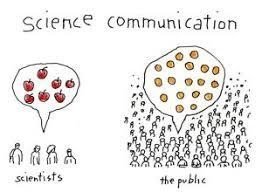
Science communication or “scicomm” as it is termed, is becoming an increasingly important tool in the skills repertoire of scientists. This is in part due to the need to combat “fake news”, pseudoscience and misinformation but also in part because it is important that research work is shared beyond academic circles and researchers are becoming aware of its importance and the potential benefits of committing to communication in some form. Academia is often referred to as an “ivory tower”, a community that is exclusive and separated from members of the public, however, there are many researchers working toward dismantling this stigma so that all people can enjoy and understand the wonders of the world we live in.

b57455ec0cca9bd19f2375e12871b959

How does science communication benefit me as a researcher?

Many scientists are often hesitant to participate in science communication because of the fear that it does not actually benefit them and instead takes up time they already do not have. Science communication has been found to be beneficial to researchers in a number of ways, this article published last year in Steemit highlights a few of these reasons. Assistant professor of fisheries ecology at Clemson University, Brandon Peoples, the lead author of a journal article published in PlosOne found that the number of tweets about a primary ecology research article was significantly correlated to the number of citations that the paper received. Although this is a fairly new area of research and there is confounding evidence, tweets may not be directly linked to the number of citations but they are important in getting the research work out into the online community, which could then result in more people reading and citing the publications.

Another benefit is that it allows you to connect with people who may have similar ideas or suggestions that could potentially result in collaboration and future research. I have found a community of diverse researchers on my own Twitter account who I constantly learn from, although we live on different continents, it has allowed us to connect, collaborate and support one another.

Ultimately, the motivation should be in sharing years of hard work with the people it will potentially benefit, whether that benefit is direct or in the expansion of our knowledge, it is important that science is shared as it is never the property of one person.

Some researchers are uncomfortable in the public eye or with communication and for that reason, it is important to remember that there are dedicated science journalists who are trained to convey a message in an interesting and understandable way. So let us never forget that our close ties to the humanities serve to benefit all of us and all of the people we hope to reach.

Why is science communication important?

As I mentioned earlier, science communication is an important tool in combating the spread of “fake news” and pseudoscience. The advancements of technology have allowed us to access vast amounts of information at the touch of a button, and although this has greatly benefited us, it has also provided a platform for the dissemination of misinformation which can sometimes be harmful to people and the environment. There are many examples of pseudoscience, one of my personal hates as a biological anthropologist is the idea that ancient structures, such as the pyramids of Giza, were built by extra-terrestrials. This type of misinformation uses racist undertones to undermine the achievements of ancient people, most notably Africans. There are many other controversial topics which researchers have been actively addressing in order to ensure that the public receives the correct information, these relate to topics such as climate change, vaccinations and race theory among others.

8402_10157311577218047_9171874701828392270_n

One controversial topic that has been discussed recently is the use of ancestry testing and genetics by white supremacists in order to justify “racial purity” which was denounced in 2018 by the American Society of Human Genetics, you can read more about that in the New York Times article by Amy Harmon.

How do we communicate science?

In order to communicate science effectively, it is important to understand the audience and community you are trying to address. Many make the mistake of saying “the general public”, which itself, is composed of many smaller “publics”. It is important to tailor the communication to the intended audience and to always remember that it is a CONVERSATION and not a lecture, do not talk AT people, engage WITH them. It is also important to remember that we have many different communities and cultures and that a lack of understanding and respect could potentially create problems in communication (another reason why diversity and representation is so crucial to the betterment of science!). Another topic which is important to me is the language in which we communicate. South Africa is home to 11 official languages, of which, English is predominantly used in research, this means that science becomes largely inaccessible to the millions of people who do not speak English as their first (or even second) language. There has been phenomenal work in this area by Sibusiso Biyela of Science Link, who translates scientific research into isiZulu. Please do yourself a favour and read this amazing article written by Sibs titled “Decolonizing Science Writing in South Africa”.

Once you have figured this out the rest is easy! Most science communication is done online these days, but it is important to remember traditional media such as radio, tv and print which have a far-reaching audience as well. This can be achieved through collaboration with local community radio stations, newspapers and TV interviews.

What can I do as a young researcher?

There are many opportunities for young researchers to engage in Scicomm here in South Africa and the recently published White Paper on Science and Technology by the Department of Science and Technology ensures commitment from our local researchers. Marina Joubert has discussed this policy and its implications in The Conversation Africa. In order to introduce you to the world of science communication, here are a few ideas and competitions that can help you on your journey!


32588573_10156200044817184_5390891865874628608_n

  • Start your own scicomm journey on social media. This was my major start, I just started tweeting! It could be about ideas, or cool pictures or published research work. Engage in your online community
  • Online science communication course through Stellenbosch University– this course is run by Marina Joubert who is one of the leaders in science communication in South Africa.
  • FameLab South Africa- One of the most prominent science communication initiatives challenges researchers to present their work in under 3 minutes! There is also an amazing pre-workshop facilitated by Jive Media Africa which I encourage as a FameLab alumni! This competition is run annually and South Africa has produced international winners such as Tshiamo Legoale, a South African Geologist at Mintek, winner of FameLab International 2017. We have some of the best science communicators in the world and you could be one of them!
  • NRF SAASTA Young Science Communicators Competition– This annual competition allows aspiring science communicators to explore various mediums for their scicomm, this includes video, audio, written text and even writing in indigenous languages. Keep an eye out for the deadlines!
  • The Conversation Africa– The Conversation is a great platform for sharing research work. They have a dedicated team of science journalists who are professional and well versed in scicomm. They are very helpful and always looking for interesting stories! As a PhD candidate, you can write an article for The Conversation with your supervisor as a co-author.
  • South African Young Academy of Science bloggers– well, I mean, need I explain? Join us! Share your voice and write for SAYAS. The call is announced annually and next year this could be your blog spot.

Science communication is a journey, find what works for you and never be afraid to explore beyond your comfort zone, you may just find that you like the deeper waters!

04de0b2b8206cfe482841c1fdbb22e9e