The mysteries of the universe: What do astronomers do?

The other day I stumbled across a question on twitter. “How do astronomers know all of this”, in response to a post showing the scale of the universe and different objects within it. I replied with a simple explanation about how we use large telescopes to observe various objects and simulations to understand the physics, but I thought I would write a longer blog post on this topic. With the South African government investing heavily on some of these large telescopes, it is even more important for people to understand why this undertaking is so important.

There are two main types of astronomers or astrophysicists. On the one side the theoreticians: the ones that mainly work through complicated mathematical equations and creating mind-blowing simulations; but what I am going to talk about here is observational astrophysics, which I focus on, and where South Africa has shown great interest with the development of the Square Kilometer Array and the successful Southern African Large Telescope.

WhatsApp Image 2019-03-19 at 10.26.39
Image of spiral galaxy M101 in four X-ray, Optical, Ultraviolet and Infrared Light taken using different telescopes

What exactly do we do?

Observational astronomers use telescopes (like MeerKAT, the Southern African Large Telescope, and several others) to study the night sky. These telescopes function as “light buckets” and collect information in the form of optical (visual) or radio light. Most land-based telescopes operate in optical or radio light because the atmosphere prevents any other light from reaching the earth, but space-based telescopes (like the famous Hubble Space Telescope) can detect X-rays, Infrared, and ultraviolet light.

This light can be used in a few different ways. We can take a picture of distant objects like galaxies to study things like their shape, structure, size and position. We can track how the light in an object like a star changes with time – which is how planets around distant stars are often discovered. Or, we can break the light up into a spectrum, which allows us to probe deeper into the chemical makeup of an object. Different types of light reveal different aspects of astronomical objects. While optical light is really good at detecting stars, the faint gas that fuels galaxies is only visible in radio wavelengths and hot, energetic events pop up as X-rays or gamma rays.

Bigger telescopes allow us to observe objects that are fainter and further away. This allows us to see further back in time, to understand the universe at earlier stages of its evolution. The further away an object is (and often the fainter an object is), the longer it takes for light to reach us here on Earth. Therefore, the light we collect with our telescopes essentially lets us look back in time to when the universe was much younger and smaller than it is today.   

WhatsApp Image 2019-03-19 at 10.28.22
MeerKAT telescope dishes. Credit: SARAO.

Why does this matter?

Aside from being able to detect asteroids that might crash into Earth, astronomy has many benefits. Studying objects in space allows us to work on answers to some of the mysteries of physics. Gravity – something we all interact with on a daily basis (unless you are reading this from the International Space Station) – is something physicists thought we understood since Isaac Newton’s days. Until some astronomers looked at the motions of galaxies and realised that there was something invisible causing these galaxies to move in unexpected ways. This led to the discovery of dark matter – which we are still trying to figure out!

Just two years ago, the groundbreaking observation of a neutron star merger (which our very own SALT contributed to) revealed where heavy elements like gold are originally created. This event, which was detected through gravitational waves and various wavelengths of light simultaneously, was one of the most important discoveries of this decade.

Astronomy teaches us about how the universe works. Although not every discovery will have implications for our everyday life, we have a natural curiosity about the universe we live. Many people experience a sense of appreciation and wonder when they look up at the night sky, especially in the absence of city lights, and wonder what’s out there. Astronomy allows us to explore that curiosity and appreciate our universe.

(At the very least, astronomy gives us a bountiful amount of pretty pictures. You can find a new one every day on the Astronomy Picture of the Day website.)

If you are curious to learn more about how specific fields in astronomy contribute to scientific questions, I have a post on Medium that goes into much more detail! You can also learn more about astronomy through Crash Course: Astronomy and by following NASA on social media.
The beauty of Diversity… perspective from an interdisciplinary study

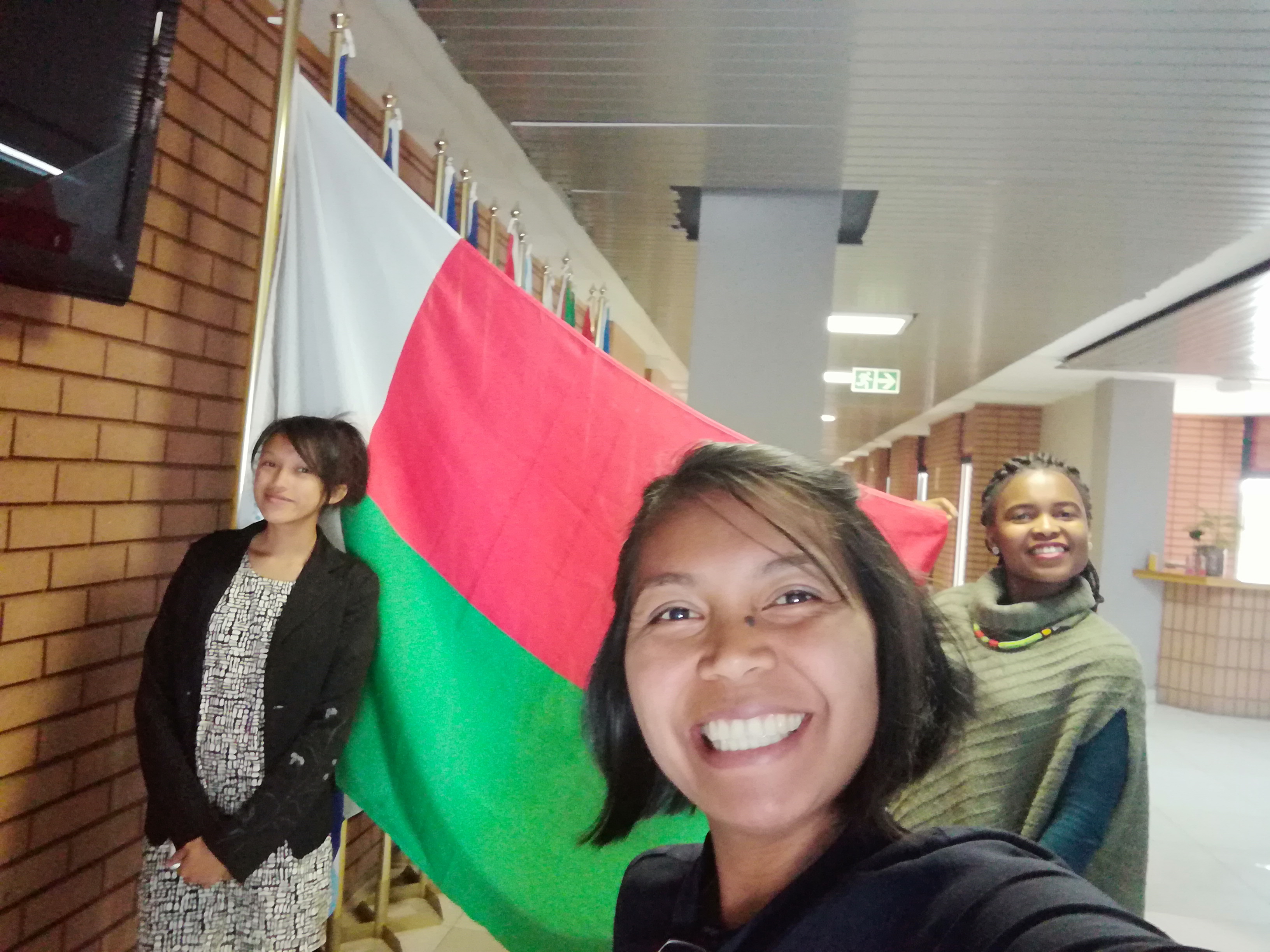
I asked some of my friends what they love about Africa (The Motherland) because I wanted to know how my friends view their communities, what makes them fall in love with their surroundings and the people around them. Why did I do this you may ask? Well a couple of months ago I fell in love, I fell bad, I was in really deep (I still am )  with Africans, their diversity, spirit, tolerance and their shared love for cultural ( food and clothes) diversity.  I mean I have always had a deep love for my own country but I did not feel the same way about other African countries until I made friends who are from various other African countries.

Currently, I am falling in love with interdisciplinary studies. Research disciplines much like Africans have their diversity embedded in them from diverse methodologies to different ways in which they impact or influence the communities they are communicated to. Contrary to popular belief Africa is not all that poor, hungry and disease infested. To us Africans, Africa is home, it is a place where we build friendships, communities and ultimately connect with each other from one country to another. It is with pleasure that I share with you what my friends had to say about Africa, our home.

fbt

Andrianina (Madagascar)

Andrianina is a working mother of 3 who is really passionate about child and youth development in Madagascar. She works on various programs that educate the youth about the repercussions of crime and corruption. Andrianina has a lovely sense of humour, is fond of nature and enjoys having a good meal. “Among Malagasy typical lunch, what I like the most is crushed cassava leaves mixed with a bit of fat pork Huummm so yummy it melts in your mouth” (she really did write that). I recommend this to you if you ever come to Madagascar.   I also love romazavz royal it is also among the best foods”

Kevin (Zimbabwe)

Speaking to Kevin made me realize how unique and precious the spirit of Ubuntu is. He says “I appreciate the togetherness, in the sense that it really does take a village to raise a child I know this from my cousins who are in Australia. They talk about how raising their children with just the grandparents is not the same as having the community around you guide their children when they need it” Kevin also appreciates the diversity of languages and how “somehow they are organized in a way that works for all of us”. He is also a lover of good African cuisine.

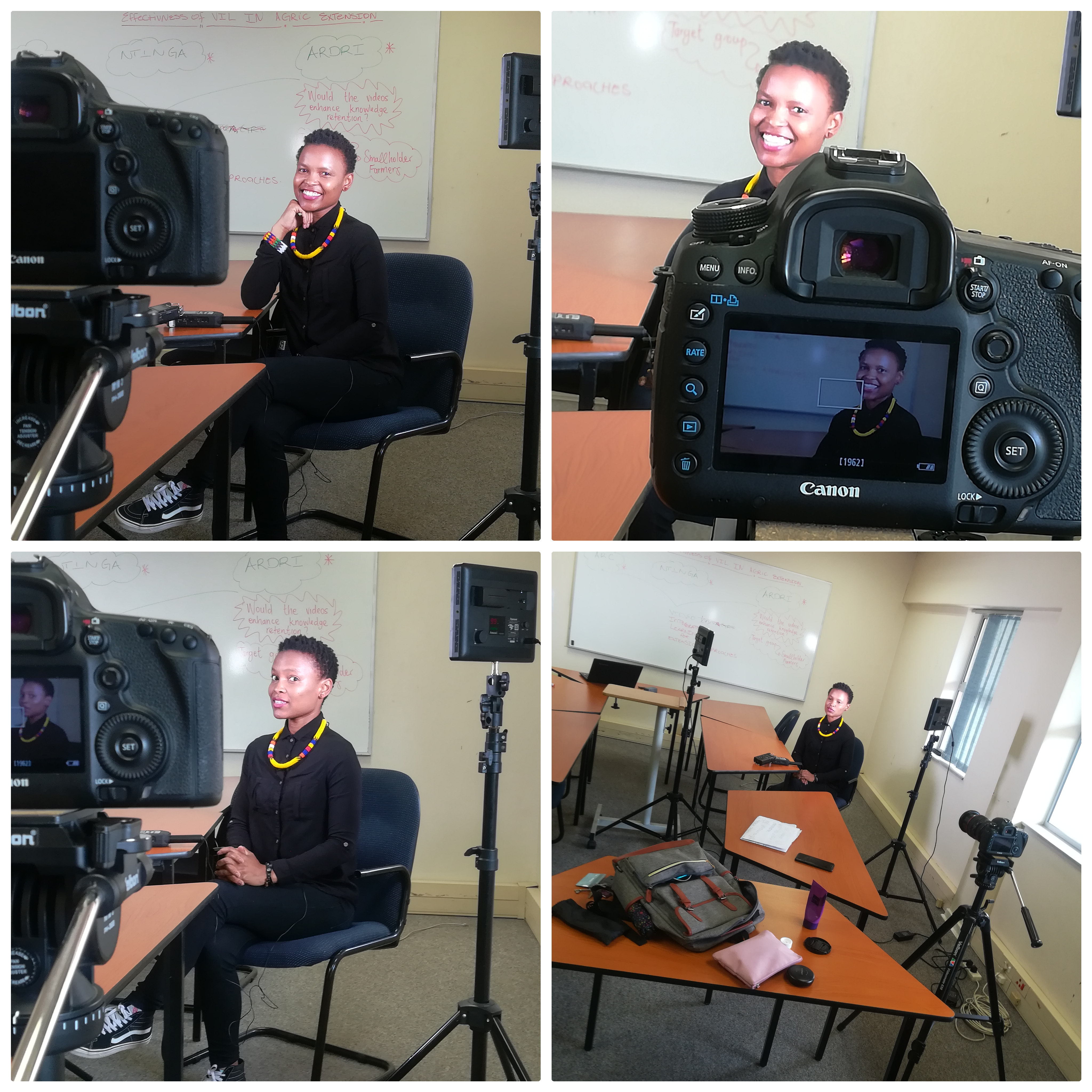
Having interacted with young people from various African countries I have learned that we as Africans appreciate different things about the Africa we love. What stood out for me in the interactions is that the diversity in our way of life is the very essence of our humanity. Much like Africans, research disciplines are different they are set on different fundamentals and principles which need to need to be respected particularly if one wishes to engage in an interdisciplinary study. Since I started working on an interdisciplinary study, combining agricultural extension with media, I have found new respect for interdisciplinary studies. I have always loved film and media (radio and print media), however, working with media on an academic space has made me appreciate the level of influence the discipline of media has over people’s lives.

Interdisciplinary studies are both intriguing and challenging Starting my PhD I knew I would enjoy integrating agricultural extension with media, what I did not anticipate was me falling in love with media and the possibilities it presents for agricultural extension that really shook me. Working on this project means more than just bringing together two disciplines, it means tapping into bigger and better levels of communicating science in our streets both locally and internationally. I cannot help but stop being ignorant an unbothered about what happens in other disciplines in terms of producing and communicating information to society. Just like how every culture is unique and important to a specific tribe and yet when brought together they make up the beautiful diversity of a country and even continent, all disciplines of research are an integral part of our communities.

working on an interdisciplinary study

Within the research space, we have to work together because at the end of the day the goal is to improve our communities be it corporate, social, business or science communities. We must be willing to step out comfort zones and into understanding the complexities of existing in an academic space.

 “If you want to go quickly, go alone. If you want to go far, go together”. ~ African proverb