I finally found some greenspiration…

The more I look after plants, the quicker they die. However, I have recently taken an interest in gardening, and there is nothing as exhilarating as seeing 90% of your plants surviving your green fingers!
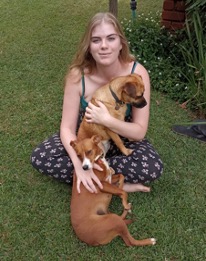
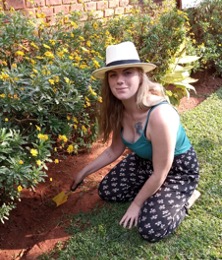
Why do I enjoy gardening? I was born into it! My mother and grandmother are avid gardeners. I grew up with colourful flowers surrounding our house, and after a few hours of being in the hot sun we enjoyed cold drinks on the soft green grass under my grandmother’s stinkwood tree. I am the most uncoordinated person you will ever meet in your life, but gardening is great for my hand-eye coordination as this needs to be in sync for the brain to receive the correct messages. Gardening is an excellent form of exercise and it’s also a way to commune with nature – birds, bees, butterflies and especially my two dogs, delight me. But as a stressed academic, gardening most importantly is an escape from reality, something that I need more of in my life. 
As a medical virologist, I am quite an expert in viruses that infect humans and animals. However, I am no plant biologist, much less a plant virologist, and the most knowledge I have of plants I gained during my first year of varsity in biology. I therefore cannot claim any specialist expertise, but bringing together my hobby and my studies I will give you a broad overview.
So, what is plant virology? The different plant virology groups focus on determining the epidemiology and population dynamics of known viruses as well as the discovery of novel plant viruses and implementation of appropriate diagnostic assays for their detection…But why is it important for scientists to be aware of plant viruses?

Viral diseases provide a major challenge to 21st century agriculture worldwide. Climate change and human population pressures are driving rapid alterations in agricultural practices and cropping systems that favor destructive viral disease outbreaks. Such outbreaks are strikingly apparent in subsistence agriculture in food-insecure regions. Agricultural globalization and international trade are spreading viruses and their vectors to new geographical regions with unexpected consequences for food production and natural ecosystems. Due to the varying epidemiological characteristics of divergent viral patho-systems, there is no ‘one-size-fits-all’ approach toward mitigating negative viral disease impacts on diverse agroecological production systems.

Viruses constitute a major cause of plant disease and have an estimated economic impact of >$30 billion annually. They constitute almost 50% of pathogens responsible for emerging and re-emerging plant diseases worldwide, and they damage natural vegetation as well as cultivated plants. Members of the begomoviruses, tospoviruses, and potyviruses all belong to three large plant virus groups that endanger food security by causing devastating diseases in tropical and subtropical food crops. In the South African context, maize meal is the staple food of many, especially in the poorer communities, and protecting these crops are of great importance.

So, how can we protect our plants – whether it be house plants or agricultural crops? Eradication or control of virus diseases is difficult given the complex and dynamic nature of virus epidemics and the great evolvability of viruses. For efficient and durable control, it is necessary to consider the genetic diversity and evolution of virus populations and have specific, fast, and reliable diagnostic tools. Disease management is based on two approaches: immunization to get resistant plants to viral infections, and prophylactic measures to restrain virus dispersion.

The research I’ve done for this blog post opened my eyes. Just like humans and animals, plants can also suffer from disease. It got me thinking…maybe it is not my over abundant love and care killing my precious plants, but some Evil Knievel virus attacking its cells. A plant requires patient labour and attention. Plants do not grow merely to satisfy ambitions or to fulfil good intentions. They thrive because someone expended effort on them.

When settling on a name for SAYAS was nearly as difficult as writing its constitution!

By Caradee Y Wright

…well, not quite, but in October 2011, when the young academy was launched with its first 20 members, plenty of decisions still had to be made. 

This despite the fact that the hard work had begun months before in 2010. Professor Bernard Slippers wrote a letter, dated 25 May 2010, to the Academy of Science of South Africa (ASSAf) saying, 

“an exciting global movement is gaining momentum to establish forums for the engagement and promotion of young scientists in the form of young scientist academies” and “I believe South African science and society can also benefit greatly from the establishment of a national Young Academy of Sciences….”

With support from the Inter-Academy Panel, the Global Young Academy (GYA) had just been launched as an umbrella body to young academies such as the oldest at the time, the Junge Akademie in Germany. The GYA was supporting the development of national academies and their support included a type of blueprint for how to go about it.

ASSAf agreed and convened a small founding committee of academics / researchers from different institutions, including ASSAf staff member at the time, Dorothy Ngila, to plan the establishment of a Young Academy of Sciences in South Africa. I was fortunate to sit on this planning committee and then go on to be nominated as a member of SAYAS. I then served two terms as Co-Chair from 2011 to 2013 and assisted SAYAS with the application to the Oppenheimer Foundation for funding support.

Aldo Stroebel, Dorothy Ngila, Caradee Wright, Bernard Slippers and Voster Muchenje at a SAYAS new member induction ceremony.

Beside trying to answer the critical question of what purpose would the Young Academy serve in South Africa, much deliberation was given to its name:

  • YASSAf – Young Academy of Science of South Africa – nope, too similar to ASSAf and we wanted our own identity. Plus it did not sound very good!
  • YASSA – without the ‘f’. Hmm……..
  • SAYA…..
  • SAYAS – South African Young Academy of Science!

[Later, once we were established it took 29 iterations of a logo to decide on the one…..]

With amazing support from ASSAf, SAYAS was founded on the 10 October 2011 and twenty excellent young scientists, nominated by their institutions and selected by a special panel including one of the founding committee members, united to be the first cohort of SAYAS members.

The early days’ activities included introducing SAYAS to the then Department of Science and Technology headed by Minister Naledi Pandor and beginning the search for funding to sustain SAYAS’s future.

The nitty-gritty stuff we all gruelled over were edits to the constitution (thank you to the lawyers for their endless support with these amendments) and putting together a strategic plan of exactly what SAYAS should be doing, why to do certain things and how to mobilise members, resources, funding etc. to do so. 

Not even a year into our formation, we won a bid to host the General Assembly of the GYA. In 2012, young scientists from all around the world convened in Johannesburg and together with SAYAS members, showcased their science as well as the activities of the Young Academies. Three highlights for me were having Minister Pandor declare the General Assembly open; the tour of the Cradle of Human Kind; and the Declaration of Sandton written by the GYA and SAYAS members (parts of the writing were done on the bus to and from the fieldtrip). The Declaration was published twenty years after the 1992 Rio Conference on Environment and Development and urged for an even greater push for sustainability.

Personally, my first five years as a member of SAYAS were extraordinary. I worked with some top academics who also happened to be amazing people and became good friends. The Executive Committees of SAYAS that I served on taught me a new meaning for work ethos and we got stuff done! Yet at the same time, we laughed, we shared stories and managed to make it all fun. One of my favourite photos of all times captures this magic element of SAYAS – a photo in honour of SAYAS member and esteemed meat scientist who worked at the University of Fort Hare, Professor Voster Muchenje. 

I helped start a science club in Ga-Rankuwa and watched youngsters leave school and later go on to graduate – they always stayed in contact. I led the healthcare judges panel for the regional and national science expos several times and encouraged learners as young as thirteen to follow their STEM[i] and social science dreams. In my academic career, through SAYAS I grew a network of scientists, both in South Africa and around the world, on which I still rely today. And I connected with the world of Academies globally – producing a five Academies[ii] report on Air Pollution and Health which we handed over to the United Nations in New York in June 2019. And most recently as an author of a NASAC[iii] report on human health climate change in Africa. I believe that if you are willing to work for SAYAS, SAYAS will work for you.


[i] Science, Engineering, Technology, Mathematics

[ii] U.S. National Academy of Science, U.S. National Academy of Medicine, Brazilian Academy of Sciences, German National Academy of Science Leopoldina, Academy of Science of South Africa

[iii] The Network of African Science Academies