Poo-rification

By Keafon Jumbam

I recently attended three weeks of intensive laboratory training on fecal hormone assays – okay, let’s be honest: poop analysis. If you’re thinking- eeuw, you are not alone. Before embarking on this PhD degree, collecting poop didn’t cross my mind. I mean, who thinks about poop, right? Except, hard-core dieters and maybe crazy scientists? And now I’m one of them, patiently waiting on batties to – em – crap so I can scoop it up, much to the surprise of the batties themselves. But guess what, there’s plenty of power in poo. Let me explain.
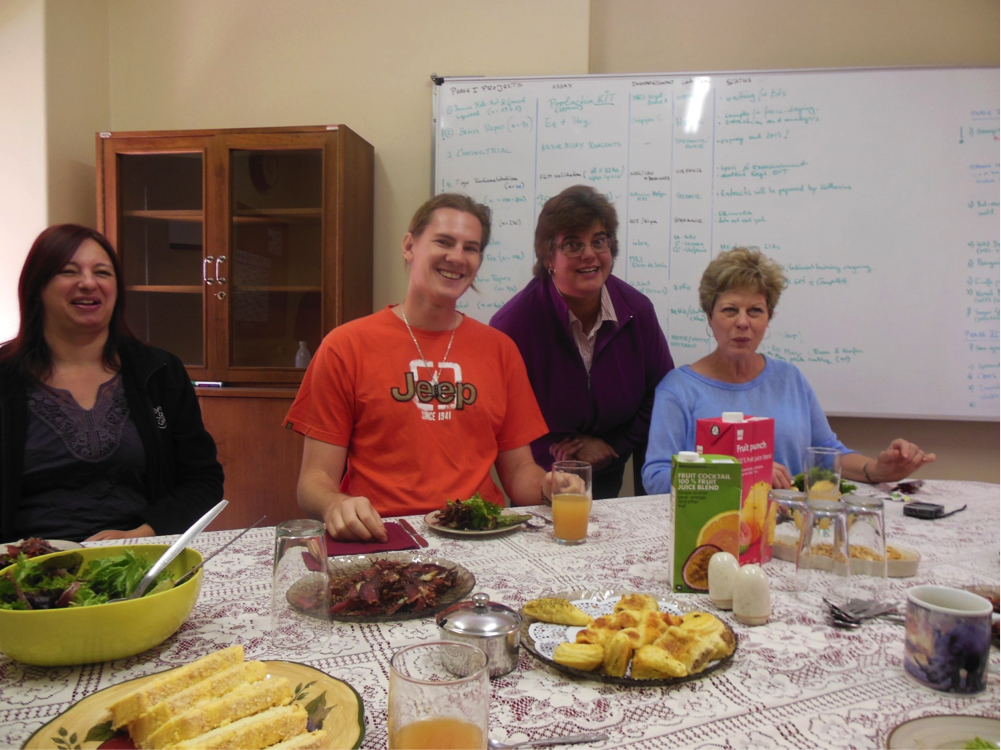
Lab work involves eating, naturally.

When stressed, an animal releases stress hormones into its system, which is commonly measured through blood extraction. But therein lies the catch: the very act of capturing and drawing blood from an animal is not only cumbersome but could contribute to further stress. And that’s not all; licensed personnel and strict ethical requirements are needed to carry out such operations. Thanks to recent advances in science, you can avoid all the above logistics by simply collecting poop. All you need do is wait for the animal to do its business – which in my case is pretty easy, since we spend time with them daily collecting behavioural data. The best part is that it’s a non-invasive and simple method of collecting scientific data without interrupting the animal’s normal activities. Once collected, it is crucial to freeze the samples immediately to prevent hormonal degradation.
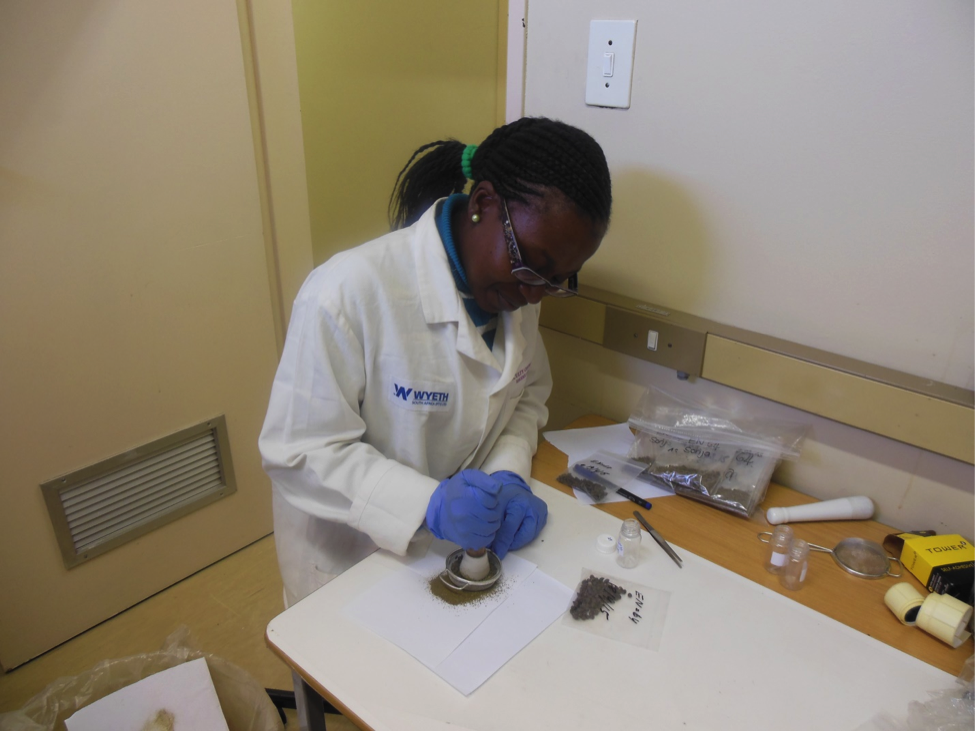
Poop pulverization
Poop pulverization

The fun begins in the lab when we play around with chemical solutions and extract hormones from the samples. Firstly, you freeze-dry the samples and then crush them before extracting the hormones. So now you have your hormone extract – yippee, but how much of it is in your sample? Caution: plenty of calculations and pipetting involved!

Practice makes perfect

A colleague and I had some pretty embarrassing moments as we quickly reached out for our cell phones when asked to do simple calculations and unit conversions. “You may be PhD students out there but in here, you are elementary level” a staff member joked. It didn’t help that our pipetting skills got worse as the weeks progressed – the harder we focused, the worse we got. “When you focus too hard, you tense up and make more errors. You need to relax and get into a rhythm that works for you” was the advice we got from the experts. We’re tough field biologists – who knew transferring liquids in a controlled environment could be so tricky?!
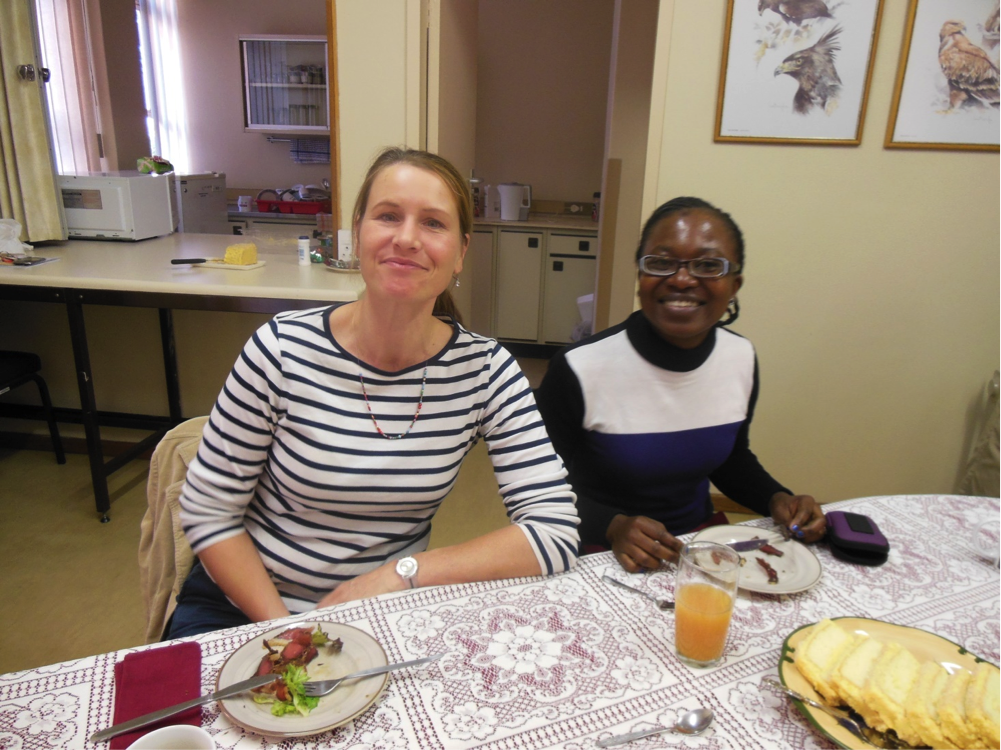
Stephanie, our patient poop tutor

Despite our failures, the exposure and experience we gained were invaluable. It was also comforting to know that it took the professionals several months of trial and error to master their art; we couldn’t possibly get it right in just three weeks. I must admit I have new respect for the challenges of a lab environment – it’s not all as straightforward as I’d thought. I went home in high spirits, looking forward to my next lab visit to perfect my skills. After all, practice makes perfect, or in this case, poo-fect!

Which doctor to be? What I could’ve been, and what I am now

By Yonela Z. Njisane

The question is “Should I have become a doctor or a Dr?” Growing up, I always knew I would be a doctor someday. Yup! I strongly believed I would be a great Veterinary doctor/surgeon. The thing is, where I come from, you see a lot of sick animals with no facilities to help and that pains my heart. I lost a couple of dogs growing up and I know how disheartening that is. I just wanted to make them all feel better and healthier.

I had it all planned out until I realised how long it takes to obtain that qualification; around 7 years if I am correct. To my surprise, I have now spent more years in school pursuing an academic doctorate instead- this is now my ninth year in tertiary. Even though the time factor initially worried me a lot, it’s probably just a lack of knowledge about how to get into the veterinary degree that stopped me from pursuing it. At first, I had plans to go back to vet science after my BSc Agric. (2011); then it shifted to returning after my MSc Agric. (2013). In my mind, I guess I never gave up on it, even though I didn’t go through with it.

The Boys basking in the morning sun

However, just recently I found confirmation that I am better off with the path I chose. A vet told me he had no other options but to put my puppy (Storm) to sleep. That, for me, would have been the greatest challenge in the job. I can never stand seeing an animal suffer in anyway, let alone dead, especially by my hand. I sometimes wonder how I am going to cope come the end of my PhD trial — which means slaughter, by the way — considering how I adore the Boys. At least I am not the one who is going to pull the trigger, that’s how I console myself. That part is not my job.

As fun as working with animals can be, challenges will always be there regardless of the path you are in, I guess. One of the Boys almost died the other day. Almost! Thank God we got to the scene in time, even though we were all sure that it was too late to redeem him. I was so close to breaking into tears until I heard him gasping for his breath, fighting for his life.

The Boys
The Boys “race squashing” in the stockade… every month… why can’t they be calm?

If only they knew that instead of all the stomping and squashing in the race every monthly managerial routine, they could just relax, allowing a smooth and a quick process. But hey, they’re just cattle. For me, it would have been a more emotional time than just a loss for the trial. But I learned that you just have to always look out where animals are involved, you have to always be there.

For instance, while some of you were on holiday during the Easter weekend, we were chilling at the farm, in the pastures, with a couple of moos, neighs and baas. It was the paddock behaviour observation week. Holiday or not, it had to be done. The weather was just plain cruel, it was freezing so much that the best way to keep warm was to do some aerobics (turned out someone was taking a video the whole time. Damn these phones).

Another survival trick in the field. A
Another survival trick in the field. A “Hakuna Matata” hat that my friend Coco brought me from Kenya. Turns out these non-floppy hats are useful in all weather conditions!

I must also say that, cattle behaviour does not change just because its holidays either. You can expect changes from external stimuli like an overly excited barking dog passing by looking for a challenge (thank God it hasn’t happen during observation times). Did you know that while our cattle in the villages respect dogs, even excusing themselves when barked at, my Boys just charge right back? In an innocent and inquisitive way, running towards the barking dog — so cute to watch! I’m so mad at myself for not capturing the scene in a video.

I was even more impressed by the braveness in my Boys when a “crazy” ox with huge horns was somehow “claiming his territory” on first discovery of the males that had been newly moved to their (ox) camp site. The ox had an attitude for days, making noises and even kicking the ground, blowing dust. That was just it though, some act. My Boys saw right through him, ignoring the whole show and carrying on with their business.

The only thing that got them on their toes (just a little bit) was the super-sized horses from the university traction centre.

The moos meet the neighs. Yes, that's the scientific term.
The moos meet the neighs. Yes, that’s the scientific term.

Had I known the huuuuuge horses were just big babies who demanded constant grooming, I might have kept my distance too. But hey, I am not complaining at all, everyone needs scratching every now and then.

So in all, I choose to look beyond what the end will or might be and just make the most of every single moment I get with my Boys (and any other animal I come across), ensuring that they are happy and healthy. I will cross the other bridges when I get to them.

Me and the giant baby,  Neigh.
Me and the giant baby, Neigh.