“Mommy, I Made You a Bracelet”: Parenting, ADHD and the Power of Connection through Creative Engagement

Like any parent, Elizabeth felt a wave of emotions as her daughter, Naledi, started school—anxiety, joy, nervousness, and mostly, excitement. But that excitement quickly faded as complaints from school began crawling in. It felt as if they were validating her deepest fears and her late-night tears: “She talks out of turn”, “She’s disruptive”, “She won’t sit still”. At first, Elizabeth thought Naledi would grow out of it. As a first-time parent, she assumed perhaps Naledi was simply more energetic or imaginative than other kids. But as the calls persisted, Elizabeth realised something deeper was at play. She knew she wasn’t a bad mother, and her daughter wasn’t badly behaved. Naledi’s brain just worked differently. She knew her daughter was empathetic, loving, creative—and misunderstood. Elizabeth, like many parents raising a child with Attention-Deficit Hyperactivity Disorder (ADHD), was doing the best she could with the knowledge and resources she had, while also processing her own upbringing and experiences.

If you’re wondering who Elizabeth is and why her story matters, allow me to explain. My name is Zanele Mabena. I’m a master’s student in research psychology at the University of Stellenbosch. My work focuses on the parent-child relationship in families where a child has ADHD, specifically exploring how parents perceive that bond. ADHD, or Attention-Deficit Hyperactivity Disorder, is a common neurodevelopmental disorder, which affects roughly 7.6% of school-age children. It is characterised by symptoms of inattention, impulsivity, and hyperactivity. The condition can present in three ways: primarily inattentive, hyperactive-impulsive, or a combination of both. It’s also frequently co-occurring with other conditions like mood disorders, anxiety, or learning difficulties. Children with ADHD often experience emotional challenges like low self-esteem and poor frustration tolerance, as well as behavioural issues such as aggression, irritability, and emotional dysregulation.

Raising a child with ADHD often leads to heightened parental stress, sometimes even marital strain. The relationship between parent and child is bi-directional—each influences the other. The behaviours associated with ADHD often require extra parental monitoring, increasing stress levels. This stress can lead to frustration, guilt, and even depression for parents who may feel like they’re failing their child. My research delves into both the behavioural and emotional dynamics of the parent-child bond—looking at things like shared activities, communication styles, parenting practices, empathy, affection, and feelings of rejection.

My research sits at the intersection of developmental psychology, family systems, and neuropsychology. In families affected by ADHD, parent-child relationships are often under strain, largely due to stigma and misunderstanding. As part of my research, I facilitated a beading workshop, where parents and children created jewellery for one another. I wanted to see whether creative, mindful engagement could strengthen these unique relationships.

But why does this matter?

The quality of the parent-child relationship is vital to a child’s cognitive, social, and emotional development. A nurturing and understanding environment helps children thrive. At the same time, parents need adequate support so they don’t experience burnout or mental health difficulties. While we know how crucial these relationships are, there is limited research that explores them in-depth—particularly in the South African context, where external factors such as poverty, substance abuse, and high rates of violence also place added pressure on families. These challenges often result in harsher or more authoritarian parenting, which can further strain the parent-child dynamic.

Through my work, I aim to understand the factors that help or hinder these relationships. What causes strain? What promotes connection? How do families cope? ADHD is often surrounded by stigma and misinformation, leaving parents feeling isolated and judged. It is essential to create safe spaces for families to share their experiences—spaces where they can feel heard, supported, and less alone.

Moreover, such stories and experiences inform researchers, educators, and clinicians, helping us build more effective interventions and support structures. The creative workshop component of my research—where parents and children crafted jewellery for one another—was designed to encourage mindfulness, communication, and quality time. The aim was to foster connection, reduce stress, and provide families with tools to build more resilient relationships.

Ultimately, I hope this research contributes to both academic literature and practical interventions for families living with ADHD. My goal is to promote mindful, shared activities that support healthy communication and emotional bonding. When parents are supported and confident in their parenting, children benefit. When children feel understood and accepted, they flourish.

In the end, families like Elizabeth and Naledi’s deserve not just awareness, but empathy, support, and tangible resources. It is through these efforts that we can build stronger, healthier relationships—one beaded bracelet, one shared story, at a time.

Images from the beading workshop
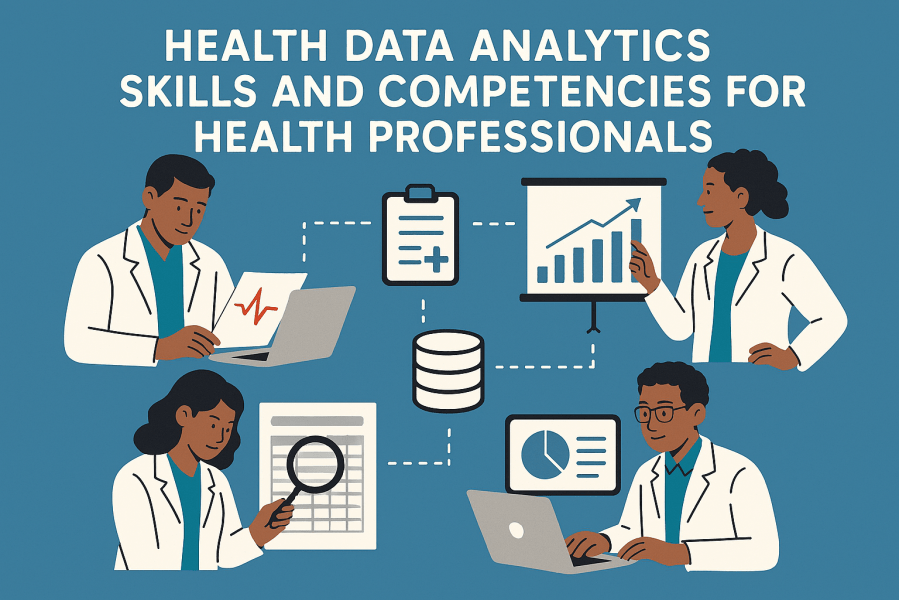
Health Data Analytics: The Future of Health Data Analytics Starts Here!

Akhona Nkwanyana

The digital era that we find ourselves living in, health data analytics has become an important tool viewed as necessary for improving patient outcomes, streamlining healthcare processes, and ensuring that decision-making is data-informed. Health data analytics or commonly known as “big data analytics in healthcare”, is considered a systematic way of analysing health data by health professionals with the objective of improving the overall management of the health system and all that comes with it (e.g. patient engagement, budgeting/costs and treatment planning). With the current growing influence of Artificial intelligence (AI), and the talks and planned rollout of the South African National Health Insurance system, it seems significant that healthcare professionals cultivate technical, analytical and ethical skills and/or competencies to navigate this ever-changing landscape.

A question seems to come up when reflecting on the above: Are health practitioners ready to embrace the power of data in healthcare?

A review is on the cusp of concluding and aims to understand what health practitioners need to be ready. Forming part of a multidisciplinary team of local and American experts, I am leading a scoping review that maps the global landscape of skills and competencies in health data analytics for health professionals. Using a rigorous, systematic, and evidence-based framework proposed by Arksey and O’Malley, the review has sifted through a decade’s (2012 to 2022) global literature to uncover the known, missing and—most importantly—  needed health data analytical skills and/or competencies.

So…why should this matter?

It matters because healthcare is no longer just about bedside manners and clinical knowledge. It’s about understanding data—big, fast, complex data—and translating it into smarter diagnoses, better illness and disease prevention and treatment, more efficient health systems, and proactive public health strategies. From hospital administrators to healthcare providers (such as doctors, nurses, community health workers, and more), professionals need a new toolkit, and this review aims to map what we know and what more is needed to be known to develop it. This review is, to my knowledge, the first of its kind to comprehensively scope literature that determined health professionals’ skills and/or competencies when it comes to data analytics, which is fast becoming essential across every level of the delivery of healthcare.

Why is this review different?

  • Global relevance: It explores variations across high-, middle-, and low-income countries, giving a truly international perspective on health data competency needs.
  • Impact potential: Findings can inform curriculum development, help design targeted training programmes, and influence policy on healthcare workforce development.
  • Innovation-ready: The insights could fuel the creation of a comprehensive skills framework, directly feeding into the fourth Industrial Revolution in healthcare.

Conducting this review ensures that the appropriate skills and/or competencies are highlighted that equip health professionals, who may often be unprepared, with the abilities to work with digital tools, understand electronic health records/data, and apply real-time data necessary for clinical and managerial/administrative decision-making. A problem has been identified, namely that many healthcare workers, particularly in low- and middle-income countries, lack the foundational skills to navigate this data-rich environment, such as basic data interpretation. As a result of this, we could potentially see a workforce gap that could limit digital health innovations in the near future.

Our review then comes in to summarise the state of skills and/or competencies that support smart, evidence-based healthcare.

What can we then expect from the review?

  • A categorised list of skills and/or competencies currently identified in the literature.
  • Geographic mapping of where these skills are emphasised—or missing.
  • A narrative summary of the similarities, differences, and key trends across settings.
  • Recommendations for course development, policy adjustments, and investment in workforce development.

Get Ready for the Future of Healthcare

As we await the results, one thing is clear: this review could influence how we train the next generation of healthcare professionals, especially as artificial intelligence, big data, and digital health tools might become the norm rather than the exception.

A chance has been provided for this study to contribute towards knowledge that’s redefining healthcare—not just technologically, but educationally and systemically. The results will be published in a peer-reviewed journal and shared widely through conferences, webinars, and social media.

Follow the journey. Share the mission. And be among the first to dive into the findings when they’re released. Because in a world where data drives decisions, skills drive change. Because the next generation of healthcare heroes won’t just wear stethoscopes—they’ll speak the language of data.

Follow for updates, and be part of the journey to smarter, data-enabled healthcare.

Note. The headline image of this blog post was generated with the help of Microsoft Copilot using artificial intelligence. Health data analytics skills and competencies for health professionals.