I am a blender. And no I don’t normally take my fruit and vegetables in liquid form. But an academic blender. Combining into one research project at least a couple of different disciplines, trying to find better solutions to problems in maternal health in my case. And I have been thinking about what it really means to be an interdisciplinary researcher, lately. Doing interdisciplinary research as one person, as opposed to a team, puts you on a mental roller coaster of sorts. Trying to make the shifts and bends needed to think in two different ways, and blend two different schools of thought to make one coherent thesis.

I built my epidemiology and biostatistics graduate education on an anthropology and natural sciences foundation. For my PhD project, I maintained some elements of epidemiology while for the first time I decided to delve into health systems and policy research. I adopted an interdisciplinary framework of life-course health development to help me investigate the extent to which the health system and the “social” environment would really impact maternal health. I don’t mind interdisciplinary thinking because it is more satisfactory for me. But it means I had to basically gain new expertise. This is great and will make me a stronger candidate, but it also means that much more work when I am doing these paradigm shifts from deductive to inductive reasoning.
I am hoping that at the end of my PhD I will be a different person, able to reduce things to numbers and testable hypothesis but capable of meaningful interpretation at the same time. I will probably be hard pressed to articulate what my “specialization” is but hopefully interdisciplinary scientist or some other such thing will suffice. Hopefully I will develop some dexterity between my chosen specializations, and develop my own which serve my goal best: to do actionable research highly relevant to the society I am in.

But that is in the future. In the meantime, I have to constantly strategize on how best to go about my research. At the moment, after spending a lot of time on qualitative work, I have to shift gears and think about the quantitative aspects of my work. That means I set aside my thinking about all of the nuances of context, processes, complex interrelations of things with one another within the health systems paradigm. Now I have to isolate “factors” from this complex milieu, transform them to valid, measurable entities and investigate hypothesis of what influences what. I already have to anticipate how these “independent factors” will actually translate back into my relativism-heavy earlier work and make a coherent story. It feels like a lot of work waiting for me. And in the end, the product of my interdisciplinary work has to be a nice-tasting smoothie that both positivist and relativist[1] thinkers can somewhat enjoy. So, how to do that?

I quickly summarize what I have been thinking and reading so far:
- Choose your fruits and vegetables wisely.
A basic awareness of the epistemological orientation of each of your disciplines, with all their “pros” and “cons” is necessary. This helps with the validity of your work within each paradigm, but also helps you figure out what it is you are really contributing at the higher, theoretical level.
- ¾ fruits, ¼ vegetables. Or vice versa?
Then there is the question: How “much” of each discipline are you injecting into your research project? In the beginning I thought my work would have a heavy quantitative lean, because that’s what I was invested in. But the qualitative stuff have taken a significant space now that I realized how much deeper I had to delve, in order to have a truly mixed, interdisciplinary output. I don’t think it will ever be 50/50 and this depends on the background and interests of the interdisciplinary researcher. But it seems inevitable that with interdisciplinary research, one side will always “suffer”.
- What taste and texture?
It is needless to say that not all research projects need be interdisciplinary. The goal of research is to answer questions and come up with solutions. So the goal very much dictates the approach. The taste and texture you want from your smoothie dictates the fruits and vegetables you choose, and how much of each. In the final analysis, I still have to be cognizant of what the overall goals of my thesis were. And sometimes re-evaluate how to blend the different analytical methods and frameworks to tell a coherent story. If I spend a lifetime as an interdisciplinary researcher, I hope to be competent enough to correctly predict how things will go together before commencing a project.
- What do you wanna call it?
Any good smoothie needs a nice, catchy and descriptive title. Something that captures the essence of what you are. Some people are microbiologists, others epidemiologists, mathematicians. How will I characterize my research at the end of it? Titles are important, because they are a window for other people to see what you have to offer. They affect how you see yourself and the opportunities you go after. For smoothies, a Sun Salutation, Nutty Date or Radiance may sound nice 🙂 . But upon closer look, you might wanna decide if you want cayenne pepper, hemp or “bee pollen” in your drink. So how to describe my research in a meaningful way when I’m out there in the world? I’m still figuring that one out…
[1] Natural scientists typically fall into the “positivist” category, while humanities scholars tend towards relativism. But there are in betweens, and things aren’t always straightforward. See this robust discussion on the complexity of the issue.
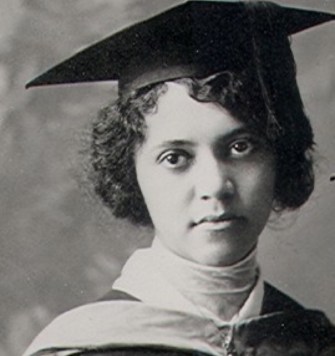 Following on from her Master’s, Ball was asked to work on improving the treatment for Hansen’s disease (leprosy). Many had tried to modify the traditional treatment, the oil from the chaulmoogra (Hydnocarpus wightianus) tree, to treat leprosy but could never get consistent results or overcome the unpleasant side effects. Eventually, Ball isolated the ethyl ester compounds from the fatty acids in the oil, which meant that it could now be used in an injection to treat the disease more consistently without the side effects. The isolation technique or “Ball method” was the preferred treatment for leprosy for nearly two decades, until 1940.

 SAYAS BLOG