A new kind of scientist

I had some time to reflect on my career after the Science Forum South Africa meeting at the CSIR in December last year. Before I began my postgraduate journey, I thought that pursuing a PhD was all about equipping me with the skills I needed to do a job or more specifically to be a scientist. Back then I didn’t understand what a scientist really was.

While the movie Outbreak did give me an idea, some of my teachers and even my dad painted a completely different picture. To them, a scientist worked in a lab, wore a white coat and did really complicated experiments to test hypotheses. Scientists didn’t venture out, they only cared about publishing and, where they could, they stayed away from the limelight. Over the years I have met some scientists like that but there weren’t many.  Was this the career I really wanted to follow?

Yes. My love for science and the need to satisfy my curiosity overpowered any stereotypes that might have discouraged me. Fortunately, as I started on this journey, I learned very quickly that a scientist was nothing like what was described to me—unless you wanted to be that kind of scientist. Being a scientist was so much more.

Why was I thinking about this after the Science Forum? For anyone who hasn’t been to one, I encourage you to attend. It really is something special. The forum brings together scientists, journalists, policymakers, business people, etc., from around the world, to discuss the importance of science, technology and innovation for development of the African continent. It also seeks to unify the African science community so that we can work more closely together to build a better continent for everyone.

The scientists I observed at the forum weren’t wearing lab coats, they weren’t hiding in their labs, and they weren’t sitting in a corner huddled over a laptop. The scientists I met were leading panel sessions and science talks. They were asking questions of other scientists, policy makers and business people. Some scientists weren’t scientists anymore — at least in the strict sense — they were starting their own companies, managing others, running communication firms, doing PR, advising ministers and so on. These scientists were different.

While the training of scientists hasn’t changed too much over the years, there are a number of critical skills, general and field dependant, which one will acquire. Outside of science, companies have found many of these skills useful for other tasks. Ever analysed large amounts of information with some comparative work? You might want to look at becoming a market research analyst. There are many more examples where training in STEM can be used for a variety of jobs—old and new.

SAMSUNG CSC
Mulalo Doyoyo: an engineer and researcher from Limpopo who is a business owner, inventor and lecturer
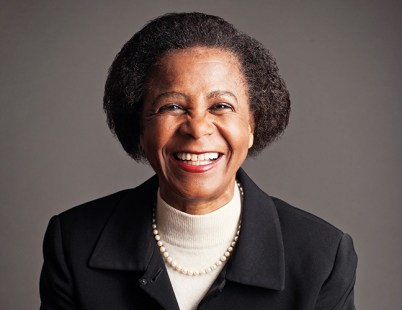
Mamphela Ramphele
Mamphela Ramphele is a South African doctor, struggle icon, academic, top business woman and author.


Elon Musk
Elon Musk is a South African-born Canadian American who studied Physics and became a business magnate, investor, and philanthropist.


As scientists we are rather lucky. There aren’t many careers which offer the same kind of flexibility and allow you to diversify. Being a scientist is not a dead end (nor is the path there straight). I have found that as a scientist— a microbiologist, in my case—I have been given more opportunities than I could have dreamed of. Yesterday, I took part in a science communication competition. Today, I have written a blog piece. Tomorrow, I will lead a discussion inspiring young scientists. The day after that, I will carry on my experiments. In a few years, I might lead a panel discussion on policy change in Africa at the Science Forum as CEO of my own private consulting firm; or perhaps I will be on a tropical island somewhere celebrating my Nobel Prize(!). As a scientist, we don’t need to keep our science in the lab, there’s a wide world out there that needs a new kind of scientist.
 

Of networking and academic celebrities…

I am going to attend a meeting in a few days featuring all of the people I have ever cited in my proposals and papers. (Well, at least 99.9% of them!). Featuring.  Sounds like a concert or a show. But that’s how it feels. When I first heard that I would have the privilege I was excited, nervous and daunted. And I don’t even have to talk, present or anything!  I will just be in the same room with a lot of people that I admire and who do such important work. I know I will be star struck. This is where my dabbles in theatre will have to pull me through, I have to act cool 🙂

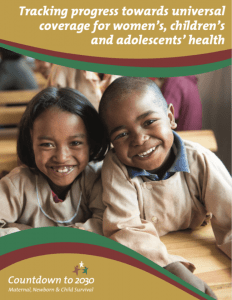
Anyway the show  meeting is about new developments in measurement of maternal, new-born, and child health interventions.  Public health researchers measure interventions so that governments and other stakeholders know if they are giving the right amount of coverage, to the right people, and if they are making a difference. So, this group of people is doing in the real world what I’m dreaming about in my thesis.

CD2030-Cover-232x300
The latest publication by the Countdown to 2030 team, who I consider my inspirations.

The meeting is truly an excellent opportunity for me to network with people who will be instrumental in me fulfilling some of my research objectives. And it’s a small meeting; so much nicer than those broader conference or networking forums where you are thrown into a room and told to “Go forth, find thee thy networks!” However, I can still mess it up…

There are many tips out there about academic networking for upcoming scholars and postgraduate students.  An example is here and here. And here. I even have a cheat sheet:

networking-article-image
Source: Make Networking Work for You


Tips are all well and good, but they are not tailored to you. They don’t hold your hand and tell you who to talk to, and what to say; or how to get the most out of your network within your own unique situation. So I am realizing that networking is easier when you actually have something concrete to gain from the interaction.  If, for instance, you are genuinely curious about someone’s work or have questions you think they can help you with — this works much better than attending a conference or meeting to “see how it goes” as far as networking is concerned (I have done this before).  So the plan for this meeting is to NOT just get on everybody’s radar through random conversation. I’m going to “stalk” the participants ahead of time (I have a participants’ list!) and aim for very specific people. I feel more ready just knowing the exact people I want to talk to, because I know WHY as well.

And I think this will work — it MUST work. It is incredibly difficult for people from the Global South to crack the networks and cliques of the Global North. Our work is not ignored because the work sucks, but partly because we haven’t struck a chord or made ourselves stand out while socializing…

So, for me, I hope that changes. And there are other platforms out there. I recently found out about the Emerging Voices for Global Health where young researchers can participate in global symposia and get the training they need to successfully do so.  It seems to be a mixture of self-driven effort (you have to get your symposium abstract accepted on your own) and just the right amount of support (with communication, networking, presentation training and coaching).

So I am looking forward to my meeting and many more similar opportunities.  Let’s rub shoulders with our celebrities until we become them, ha ha. 🙂